A Big Swing, A Messy Landing, And A Lot Left Unanswered
A Familiar World On The Brink Again
There’s something comforting about going back to Hawkins, Indiana, even when the town is actively falling apart. Stranger Things 5 arrives carrying the weight of nostalgia, expectations, and a fanbase that has grown up alongside its characters. This season positions itself as a final reckoning, not just for Vecna, but for the identity of the series itself. It wants to be bigger, darker, louder, and more cinematic than anything that came before it. In many ways, it succeeds. In others, it feels like the show is fighting itself. What we get is a season that looks incredible, sounds incredible, and frequently forgets how dangerous it once felt. Stranger Things 5 is entertaining, frustrating, and ambitious all at once. It’s a season that clearly had something to say, even if it wasn’t always sure how to say it. The result is a finale that satisfies emotionally but raises more questions than it answers.
The People Behind The Curtain
Stranger Things 5 is created by Matt and Ross Duffer, who once again serve as showrunners, writers, and executive producers. The season stars Millie Bobby Brown as Eleven, Finn Wolfhard as Mike Wheeler, Gaten Matarazzo as Dustin Henderson, Caleb McLaughlin as Lucas Sinclair, and Noah Schnapp as Will Byers. David Harbour returns as Jim Hopper, while Winona Ryder continues her long-running role as Joyce Byers. Natalia Dyer, Joe Keery, Maya Hawke, Priah Ferguson, and Sadie Sink round out the core cast, alongside returning and new supporting characters. The season also brings back Jamie Campbell Bower as Henry Creel, better known as Vecna. Visually and tonally, the Duffer Brothers lean heavily into large-scale horror spectacle, pulling inspiration from classic 80s cinema, anime power scaling, and blockbuster action filmmaking. It’s clear Netflix spared no expense here. The ambition is undeniable, even when the execution stumbles.
A Season That Looks Like A Movie
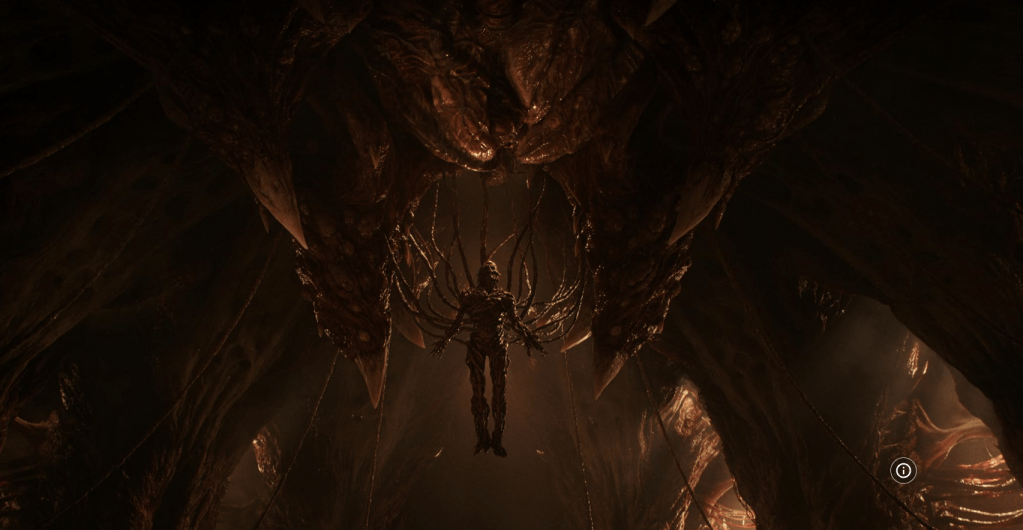
One thing Stranger Things 5 absolutely nails is presentation. This season looks expensive in the best way possible. The cinematography feels theatrical, the lighting is moody and deliberate, and the visual effects are consistently strong. There are moments where the show genuinely feels like a polished horror film from an A-list studio rather than a streaming series. The Upside Down has never looked better or more ominous. Camera movement is confident, framing is purposeful, and action scenes are staged with clarity. Even when logic starts slipping, the visuals carry the momentum forward. The soundtrack deserves special praise as well, reinforcing tension and emotion without overpowering the scenes. From a purely technical standpoint, Stranger Things 5 feels like the culmination of everything Netflix has invested in this franchise.
Performances And Character Highlights
Performance-wise, the cast largely delivers. Eleven and Hopper’s relationship once again provides emotional gravity, especially as Hopper confronts his own trauma and learns to trust others. Dustin’s arc dealing with Eddie’s death from Season 4 is handled with genuine care and restraint. Will Byers finally stops feeling like an afterthought and leans into the strengths that make him unique. Erica Sinclair and Holly Wheeler stand out more than expected, bringing energy and presence that makes you want more from their characters. The core group of Dustin, Mike, Lucas, and Will remains solid, even if they’re sometimes overshadowed by newcomers. Kali’s return is one of the season’s strangest elements, with noticeable changes that raise questions about continuity. Jamie Campbell Bower continues to sell Vecna as unsettling and intense, even when the writing around him falters. Acting is rarely the problem this season.
Big Stakes That Somehow Feel Smaller
Stranger Things has always conditioned its audience to expect consequences. Each season raised the body count, pushed the horror further, and made survival feel uncertain. That’s where Season 5 starts to wobble. Despite constant danger, the lack of major character deaths makes the stakes feel oddly muted. It’s not about being bloodthirsty. It’s about narrative consistency. When a show teaches you that actions have consequences, pulling back at the finish line feels strange. With such a bloated cast, the tension spreads thin. Too many characters are protected by plot armor. Moments that should have felt devastating instead feel safe. The season wants urgency but hesitates to commit fully. That hesitation lingers long after the final battle ends.
Vecna The Mind Flayer And Too Many Questions
The mythology is where Stranger Things 5 becomes most frustrating. Vecna’s power scaling feels inconsistent from scene to scene. The Mind Flayer remains visually imposing but narratively underexplained. Is it pure evil, an eldritch force, or something more complex? The show never commits to an answer. Creatures introduced in earlier seasons fade away without explanation. Demo bats, demo dogs, and other threats vanish when they should logically still exist. The Upside Down itself feels emptier than before. Vecna’s survival, movement, and strategy raise more questions than they resolve. For a final season, the amount of unanswered lore feels excessive. Instead of tightening the mythology, the show expands it without providing clarity.
Humor Identity And Tonal Whiplash
Stranger Things has always balanced horror with humor, but Season 5 occasionally leans too far into joke territory. With so many characters cracking wise, the tension diffuses too often. It starts to resemble a Marvel-style rhythm where everyone gets a punchline. Comic relief characters feel redundant, and some arcs lose purpose. Murray, for example, feels unnecessary this season. Steve remains likable but stuck in the same babysitter loop. Certain supporting characters feel present without contributing meaningfully to the plot. When everyone is funny, no one stands out. The tonal inconsistencies pull the season in multiple directions at once, weakening its emotional impact.
The Final Battle And Its Problems
The finale goes big. Visually, it’s impressive. Emotionally, it’s mixed. The heroes storming Vecna’s territory should feel overwhelming, but the villains feel oddly disadvantaged on their own turf. The Mind Flayer and Vecna absorb punishment with surprisingly little resistance. The battle leans heavily into spectacle, bordering on Power Rangers or anime-style escalation. While that’s fun on the surface, it clashes with the grounded horror roots of the series. The lack of serious injuries or permanent losses during the final confrontation makes victory feel too easy. It’s entertaining, but not as haunting as it could have been.
Unresolved Threads And Lingering Frustrations
The epilogue leaves several threads dangling. Secondary antagonists exit too cleanly. Major events occur with no lasting consequences. Characters walk away from chaos without accountability. The darker implications of experiments, civilian casualties, and moral compromises are brushed aside. Stranger Things 5 touches on cult-like manipulation, trauma, and obsession, but doesn’t always explore them fully. There’s a sense that the show wanted to move on rather than sit with the discomfort it created. That decision undercuts some of the season’s strongest themes.
Final Thoughts On Stranger Things 5
Stranger Things 5 is a season of highs and frustrations. About seventy percent of it works extremely well. The remaining thirty percent is where the cracks show. It’s ambitious, visually stunning, emotionally resonant in places, and messy in others. The identity feels split between grounded horror and blockbuster spectacle. Despite its flaws, it’s still an engaging ride and a fitting, if imperfect, send-off. The cast delivers, the production shines, and the emotional beats mostly land. It just leaves too much meat on the bone. Stranger Things 5 receives a 6.5 out of 10.
If you like what you read, please like and share. For more spoiler-free reviews, sign up for The Story Monster newsletter for weekly updates.
 The Story Monster
Leave a comment